Treasury management trends for 2026
- Treasury’s role has changed, but legacy systems haven’t
- 1. Treasury intelligence: From visibility to predictive insight
- 2. Continuous, API-Connected treasury operations
- 3. AI at scale: From experimentation to operational
- 4. Integrated risk, compliance & governance in real time
- 5. Strategic treasury: Embedded partner to business growth
- 2026 Is the year treasury proves its value
- Link copied
Treasury’s role has changed, but legacy systems haven’t
Global expansion, real-time payments, regulatory pressure, and ongoing volatility have fundamentally changed what CFOs need from treasury. Businesses now operate across more markets, currencies, and payment rails earlier than ever before, often with lean finance teams and little margin for error. In 2026, treasury can no longer function as a fragmented, reactive back-office operation. It must become a connected control layer that gives CFOs clarity, confidence, and control as the business scales.
The real divide in 2026 will not be between companies with visibility and those without it. It will be between those operating in continuous financial flows and those still built around reporting cycles. The winners will not simply see their cash. They will act on it, continuously, with intelligence embedded into execution.
1. Treasury intelligence: From visibility to predictive insight
Real-time visibility into cash has become widely available. However, visibility alone is no longer enough.
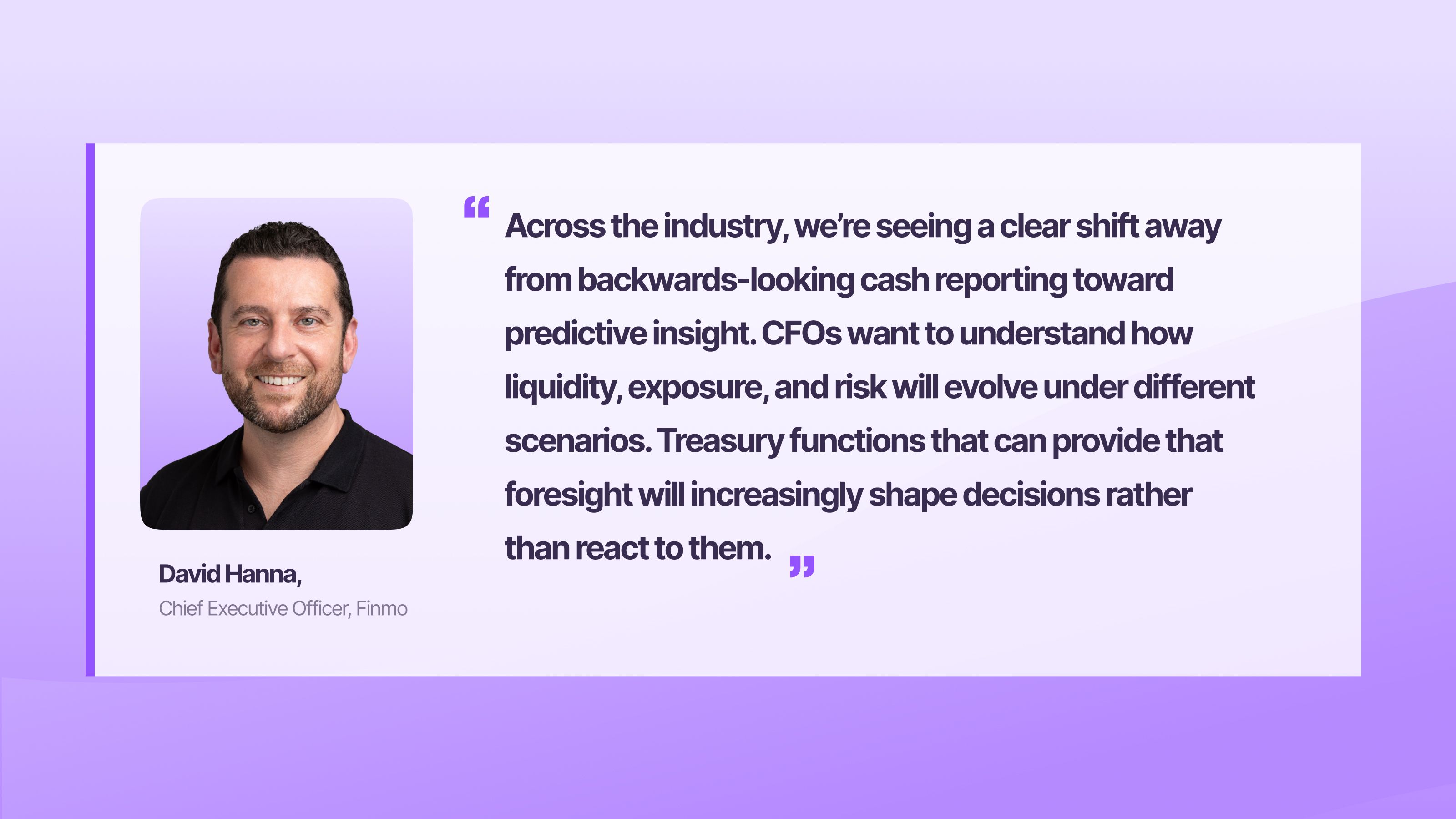
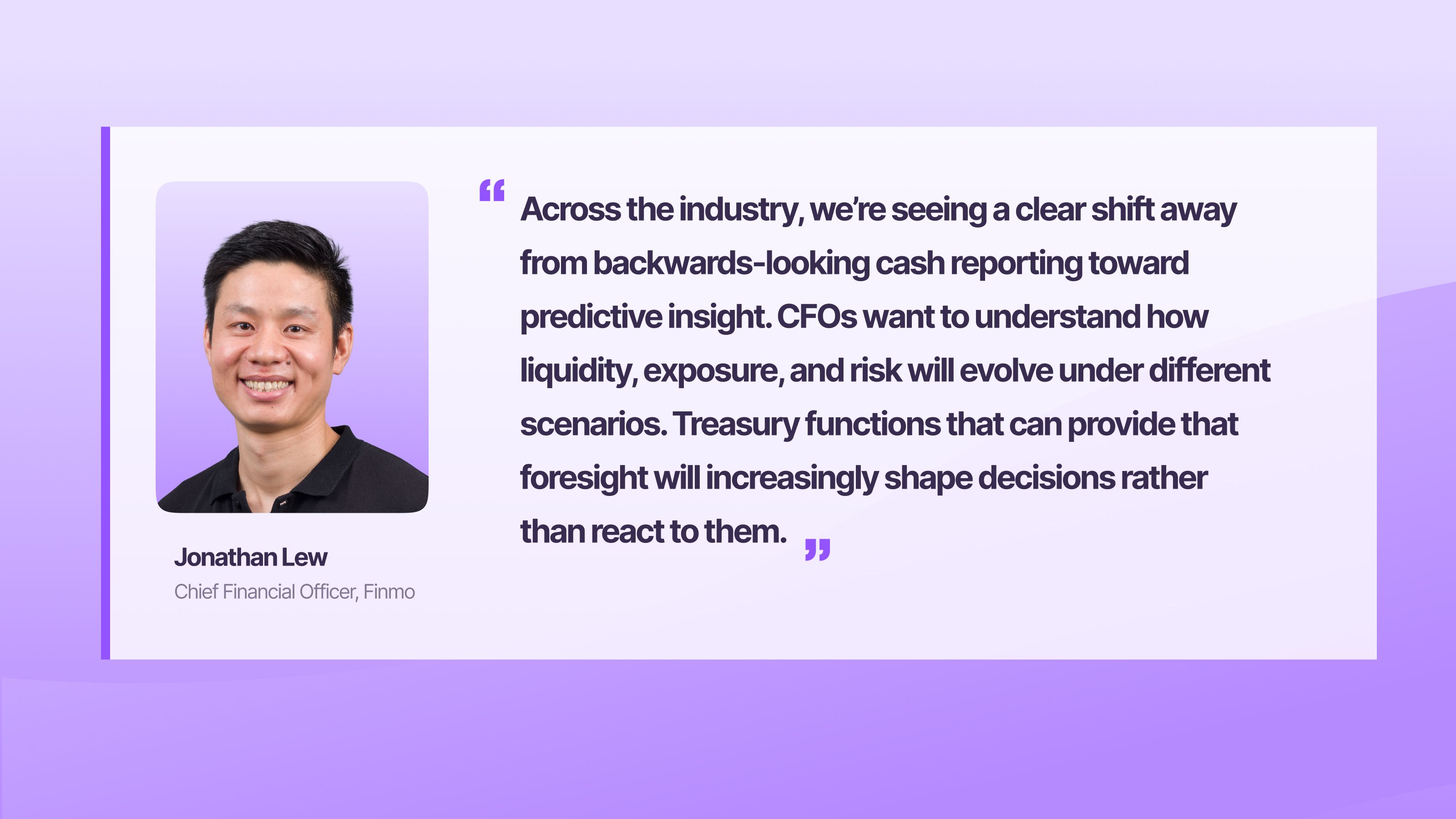
CFOs need context. They need to understand why cash is moving, how exposures are changing, and what different scenarios mean for liquidity, FX risk, and runway. This is pushing treasury beyond static dashboards toward predictive liquidity insight and decision intelligence.
By connecting ERP data, banking activity, and cash flows into a single, coherent view, treasury teams can move past backward-looking reporting. Forecasting becomes continuous rather than periodic, and treasury evolves from a reporting function into a decision-support layer for the CFO.
For modern CFOs, this shift is crucial, replacing reactive adjustments with proactive planning, and uncertainty with informed judgement.
2. Continuous, API-Connected treasury operations
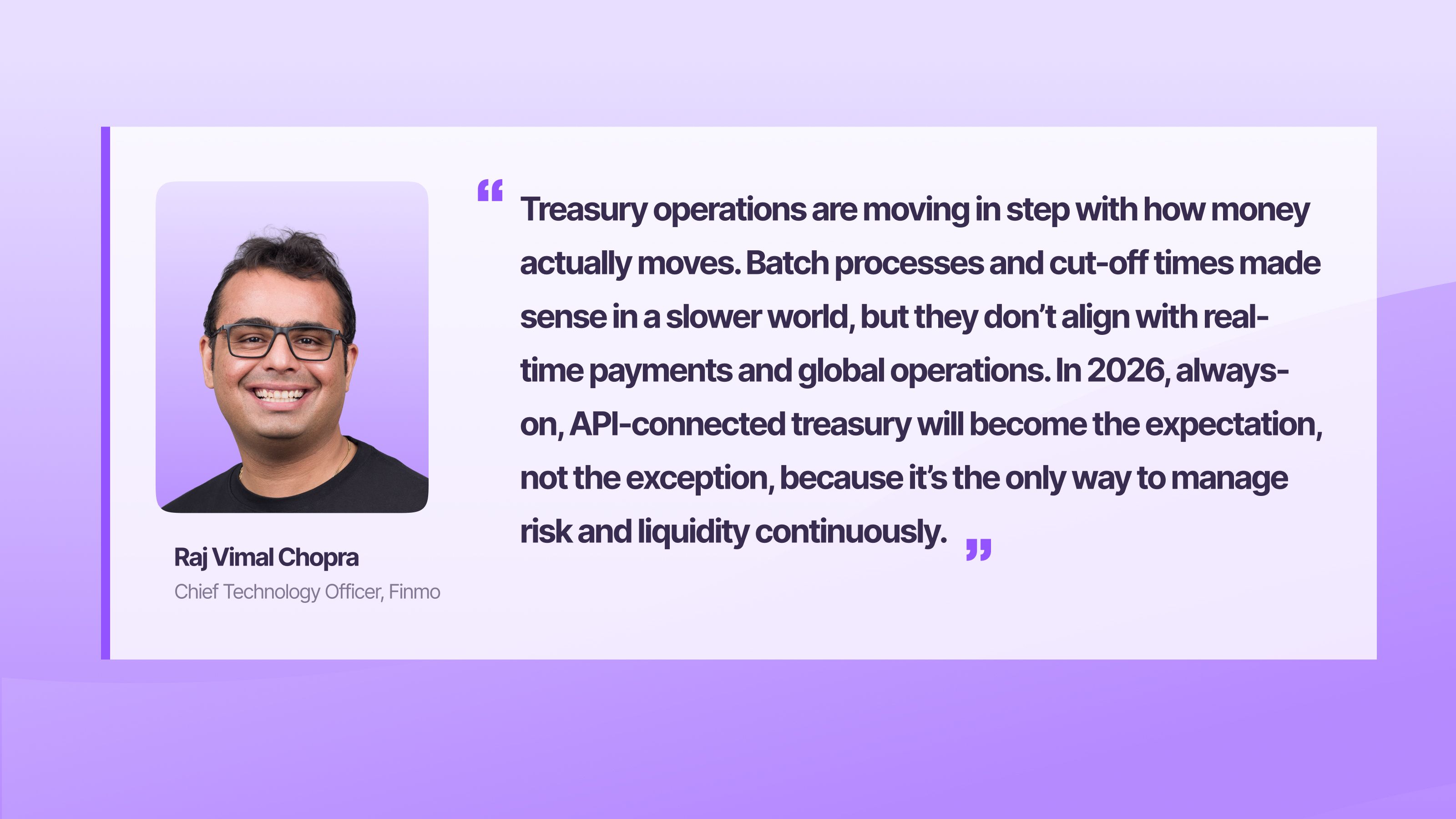
Treasury operations were traditionally built around cut-offs, batch processing, and banking hours. That model no longer reflects how money moves across borders in modern businesses.
In 2026, cross-border payments are moving toward an increasingly always-on state. Liquidity and exposures change throughout the day, not at the end. To keep up, treasury operations are becoming deeply API-connected, integrating banks, ERPs, payment providers, and FX platforms into a single operational flow.
This connectivity replaces manual handoffs and fragmented tools with automated workflows and a single source of truth. It also enables real-time monitoring and execution, reducing operational risk while increasing speed and resilience.
For startups and mid-market companies, the impact is significant. Continuous treasury operations mean fewer bottlenecks, faster response times, and a clearer understanding of the business’s true financial position at any given moment.
3. AI at scale: From experimentation to operational
In 2026, AI will no longer sit on the periphery of treasury transformation. It will become part of the daily operating fabric.
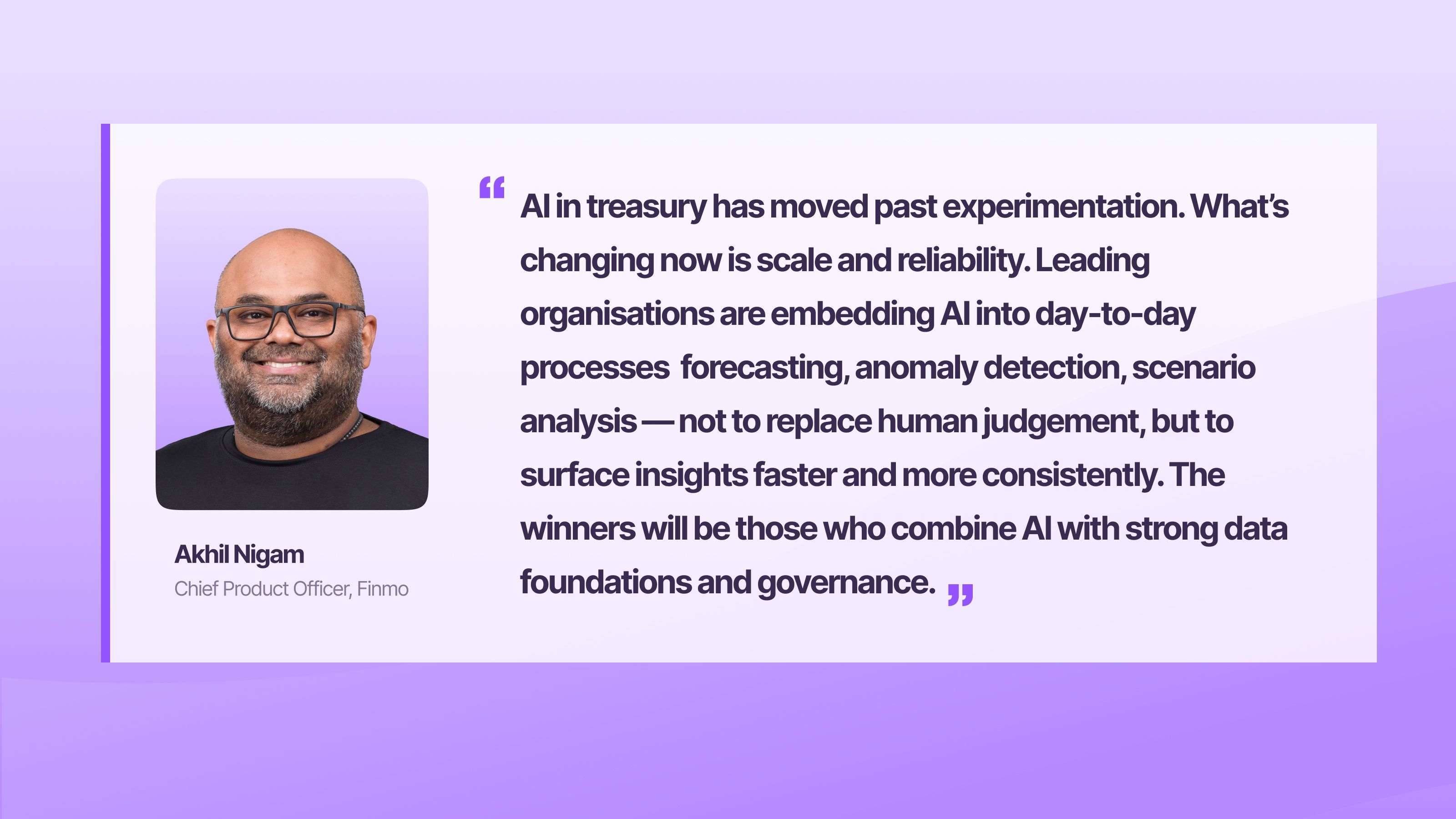
What began as pilots and isolated use cases has matured into AI supporting core treasury processes: anomaly detection, continuous forecasting, scenario simulation, automated reporting, and intelligent alerts. Large language and generative models can synthesise vast volumes of financial data into insights that finance teams can act on quickly.
However, AI without governance can amplify risk rather than reduce it. In regulated financial environments, intelligence must be explainable, auditable, and traceable. Models trained on incomplete or fragmented data can generate false confidence, missed exposures, or compliance blind spots. The question is no longer whether AI can generate insight, but whether that insight can be trusted.
The real differentiator in 2026 will not be AI adoption, but AI discipline.
Clean, connected data foundations are essential. Governance frameworks must ensure model transparency, control thresholds, and human oversight. When designed within a strong control architecture, AI elevates treasury from reactive execution to predictive decision support.
The result is not automation for its own sake, but a treasury function that is faster, more consistent, and structurally better equipped to support CFO decision-making at scale.
4. Integrated risk, compliance & governance in real time
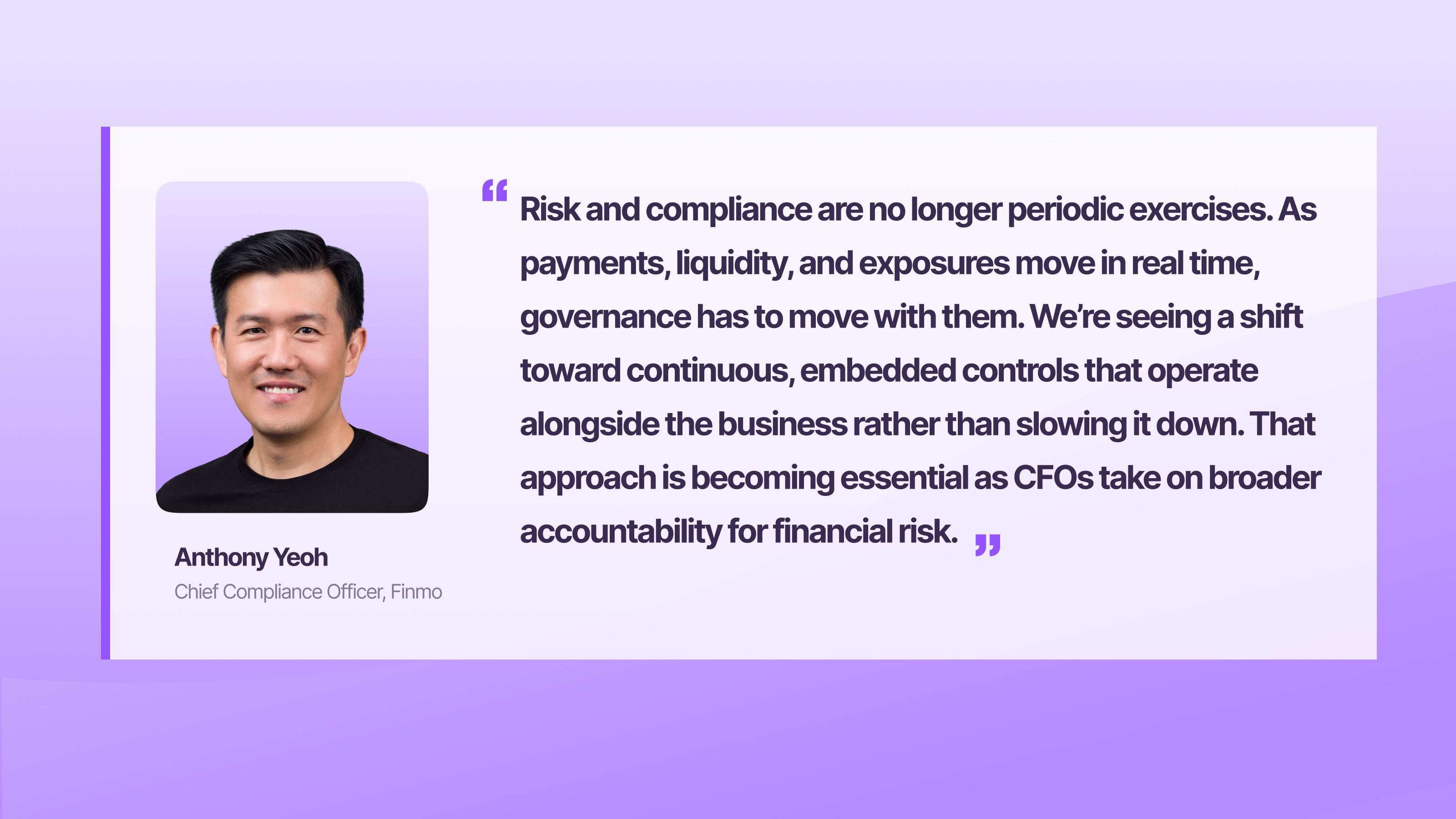
Treasury risk now spans liquidity, FX exposure, counterparty credit, fraud, and macroeconomic headwinds. Discovering issues after the fact is no longer acceptable. Instead, continuous monitoring and automated controls are helping teams identify and address risks as they emerge.
Real-time governance also extends to compliance. Payments, regulatory obligations, data privacy, and audit readiness increasingly need to operate at the same speed as the business itself. The most effective treasury setups embed controls directly into workflows, ensuring governance without slowing operations.
For CFOs, this approach provides assurance without friction, and confidence that control scales alongside growth.
5. Strategic treasury: Embedded partner to business growth
As treasury becomes more intelligent, connected, and automated, its role within the organisation expands.
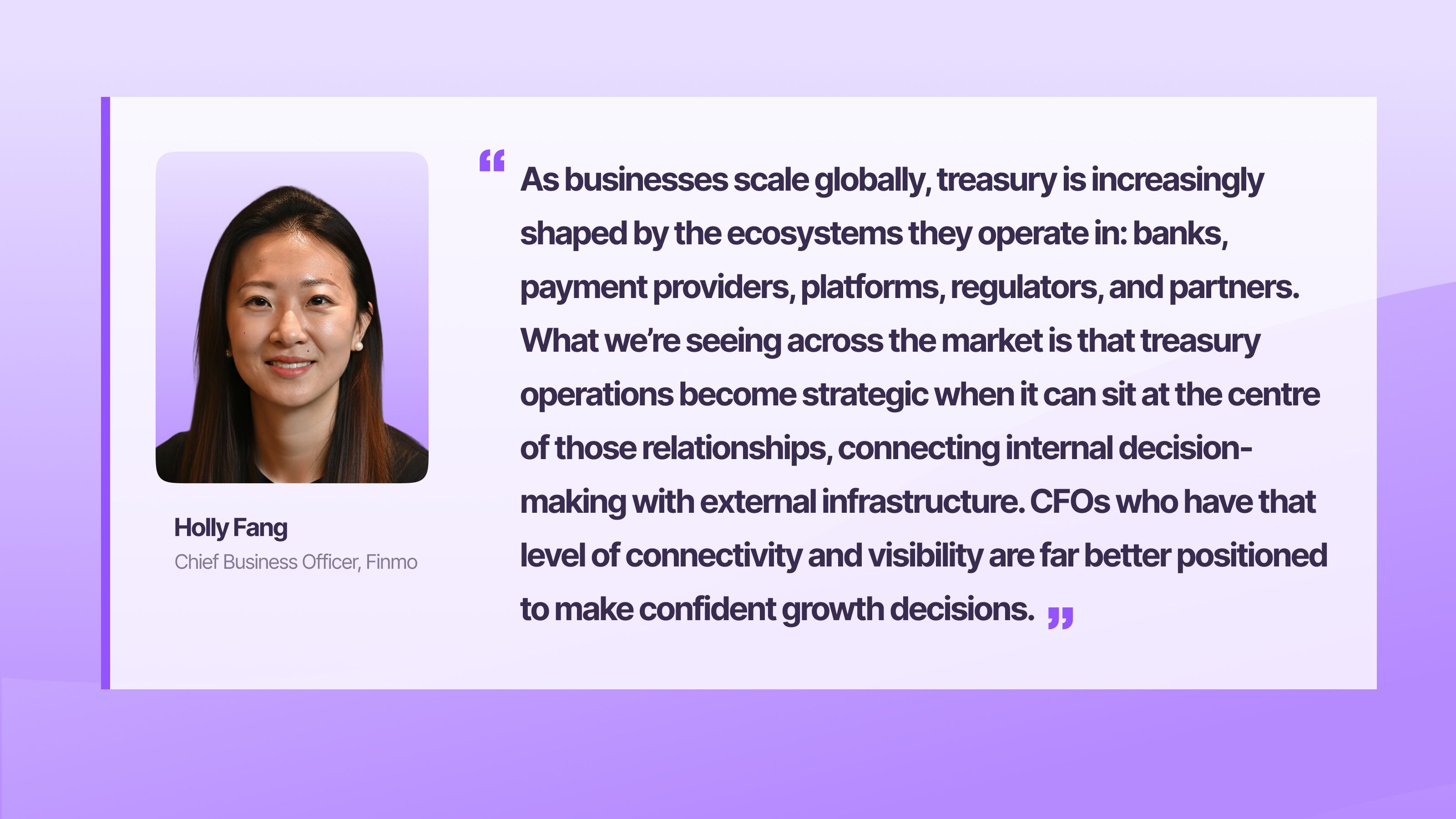
In 2026, treasury is expected to play an increasingly critical role as a growth enabler. Liquidity strategy influences market expansion. FX insights inform pricing decisions. Scenario planning shapes investment pacing and capital allocation. Treasury data feeds directly into board discussions and long-range financial planning.
This shift also increases the treasury's cross-functional influence. Collaboration among FP&A, procurement, and corporate strategy teams is becoming more common as treasury insights guide decisions across the business.
For modern CFOs, treasury is no longer just about managing money, it is about enabling confident, informed growth.
2026 Is the year treasury proves its value
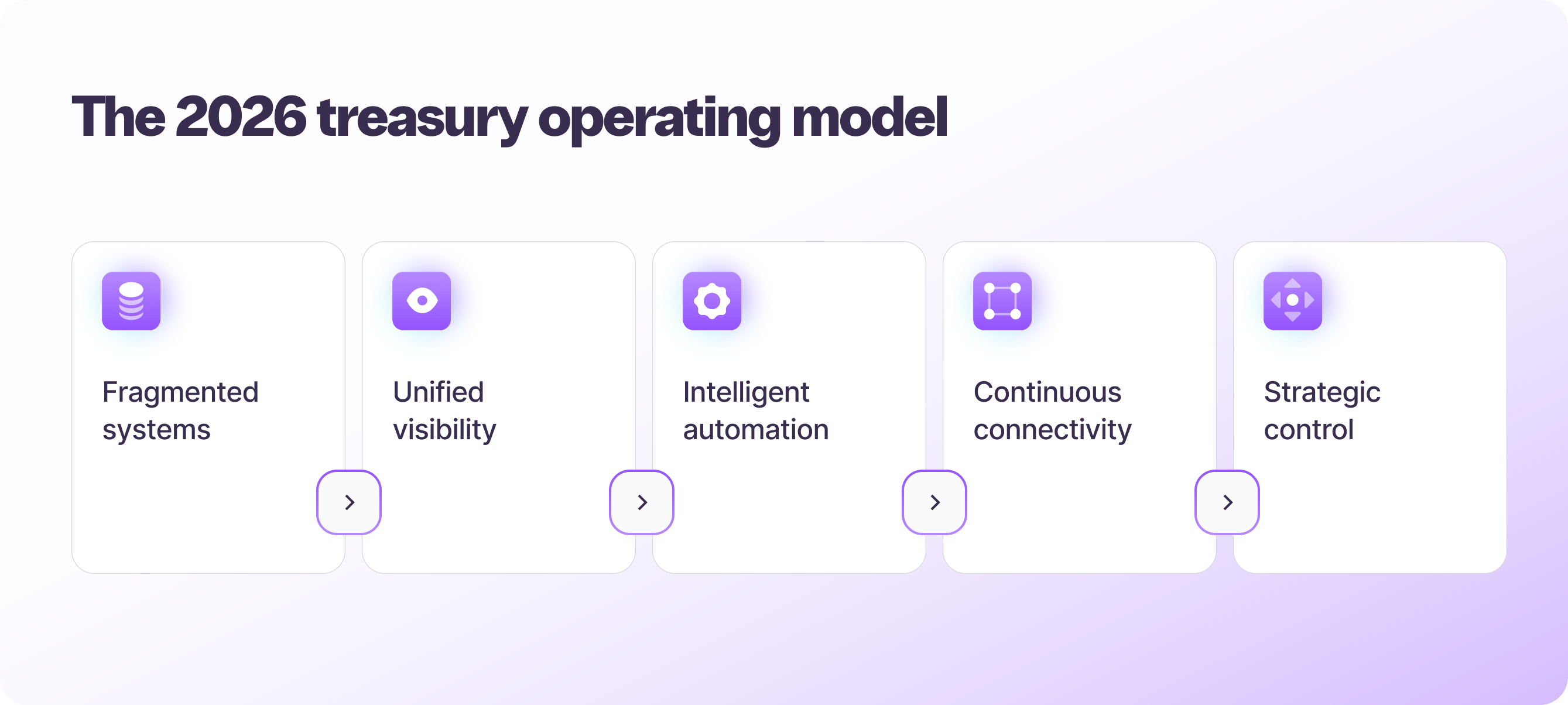
These trends point to a common theme: treasury is becoming continuous rather than periodic. Intelligence is replacing static visibility. Risk and control are moving upstream into everyday workflows. And treasury data is increasingly shaping strategic decisions, not just recording their outcomes.
Treasury leadership in this new era will be defined by the ability to connect these capabilities into a coherent operating model, one that gives CFOs clarity across complexity, confidence in uncertainty, and control as their businesses scale.
Treasury is emerging as the CFO’s control tower, a source of clarity in complexity, confidence in volatility, and foresight in an uncertain world.
2026 will not be remembered as the year the treasury gained more tools. It will be remembered as the year the treasury proved its strategic value.
The organisations that thrive will be those that move beyond fragmented systems and periodic reporting toward continuous, connected financial intelligence. Treasury will no longer sit at the edge of execution. It will sit at the centre of decision-making.
In an environment defined by volatility, speed, and global complexity, CFOs do not need more dashboards. They need foresight.
That is what modern treasury must now deliver.