What is TMS-Lite? Treasury management solutions explained
- Link copied
TMS-Lite is a simplified treasury management system built for startups and scaling companies.
Instead of complex enterprise treasury software, TMS-Lite platforms help finance teams:
- See cash across multiple bank accounts and entities in real time
- Forecast liquidity and runway using live financial data
- Manage global payments and currencies from one platform
Startups typically adopt TMS-Lite when they begin operating across multiple banks, currencies, and international markets.
Why startups outgrow spreadsheets and bank portals
Startups often manage treasury operations through spreadsheets and multiple bank portals.
This works early on, but becomes difficult once the company operates across multiple bank accounts, entities, and currencies. Payments get processed, bank statements get downloaded, and cash balances are checked occasionally to confirm runway.
But that approach starts to break once the company begins scaling.
Treasury becomes more complex as startups scale
When a startup reaches Series A or Series B and begins expanding across markets, treasury complexity increases quickly.
But that approach stops working once a startup reaches Series A or Series B and begins scaling across different regional markets.
At this stage, three things typically happen at the same time:
- You operate across multiple bank accounts and currencies
- Cross-border payments increase as you hire and pay vendors globally
- Investors expect cash runway forecasts and liquidity planning
And if you want to build a fast-growing startup without the financial hiccups, your treasury cannot just involve sending payments or reconciling statements. It has to become a strategic control layer that determines how clearly you can see your liquidity and how confidently you can scale.
For large corporations, this infrastructure is typically delivered through full-blown Treasury Management Systems (TMS). But for startups, those enterprise systems often introduce far more complexity than the business actually needs. That’s where TMS-lite can help.
Even smaller finance teams face similar challenges. According to PwC’s 2025 Global Treasury Survey:
- 83% of organizations identify FX exposure as their most critical financial risk
- 74% are expanding the use of AI for predictive analytics and forecasting
- 65% plan to increase API connectivity across treasury systems
These trends are now shaping how startup finance teams manage treasury infrastructure.
What is TMS-Lite?
TMS-Lite is a simplified treasury management system designed for startups and scaling companies.
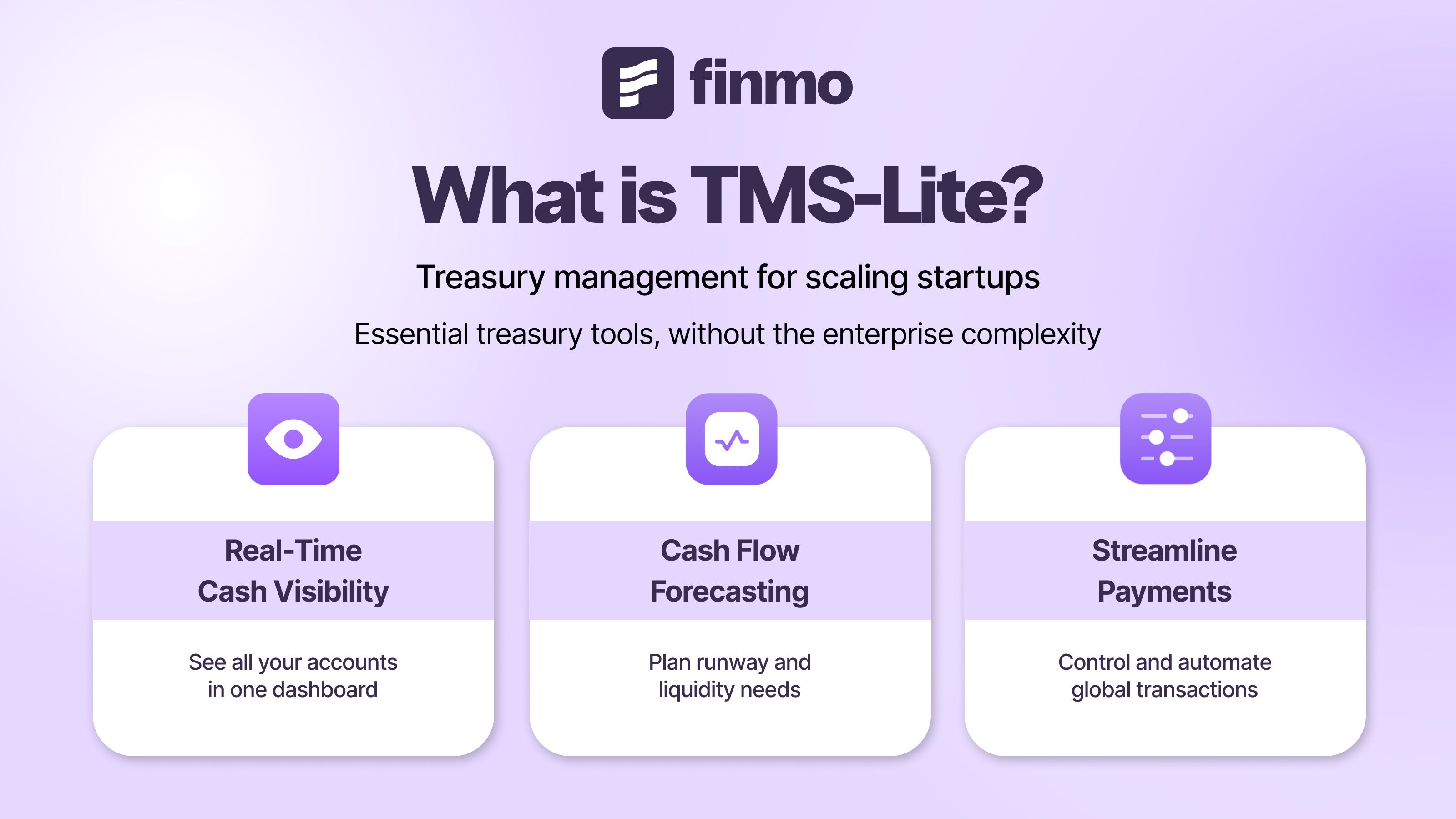
It provides the essential treasury capabilities finance teams need including cash visibility, forecasting, and global payment control without the complexity of enterprise treasury systems.
Rather than covering every treasury function imaginable, TMS-Lite solutions focus on the workflows that matter most for growing startups:
- Real-time cash visibility across bank accounts
- cash flow forecasting to plan runway and liquidity
- payment orchestration with proper controls and approvals
The goal is not to replicate a full corporate treasury department. The goal is to give finance teams clarity and control over cash as the business scales.
Instead of building a full corporate treasury department, startups need systems that allow small finance teams to operate with the same financial clarity.
In simple terms:
- Enterprise TMS platforms support complex treasury departments
- TMS-Lite platforms give growing companies the treasury infrastructure they need before they have a treasury team
Why enterprise TMS platforms don’t work for startups?
Traditional treasury management systems are designed for organizations with complex financial operations and large treasury teams.
Enterprise TMS platforms also come with significant operational overhead. Implementation can take six to eighteen months, often requiring consultants, internal IT teams, and extensive system configuration.
For startups trying to scale quickly, the real treasury questions are much simpler:
- Where is our cash across all bank accounts and currencies?
- How accurate is our runway forecast for the next six to twelve months?
- How do we manage global payments without manual reconciliation?
TMS-Lite platforms are designed to answer those questions without forcing startups to adopt enterprise-grade treasury infrastructure too early. They provide the essential treasury capabilities finance teams need today, while remaining flexible enough to scale as the company grows.
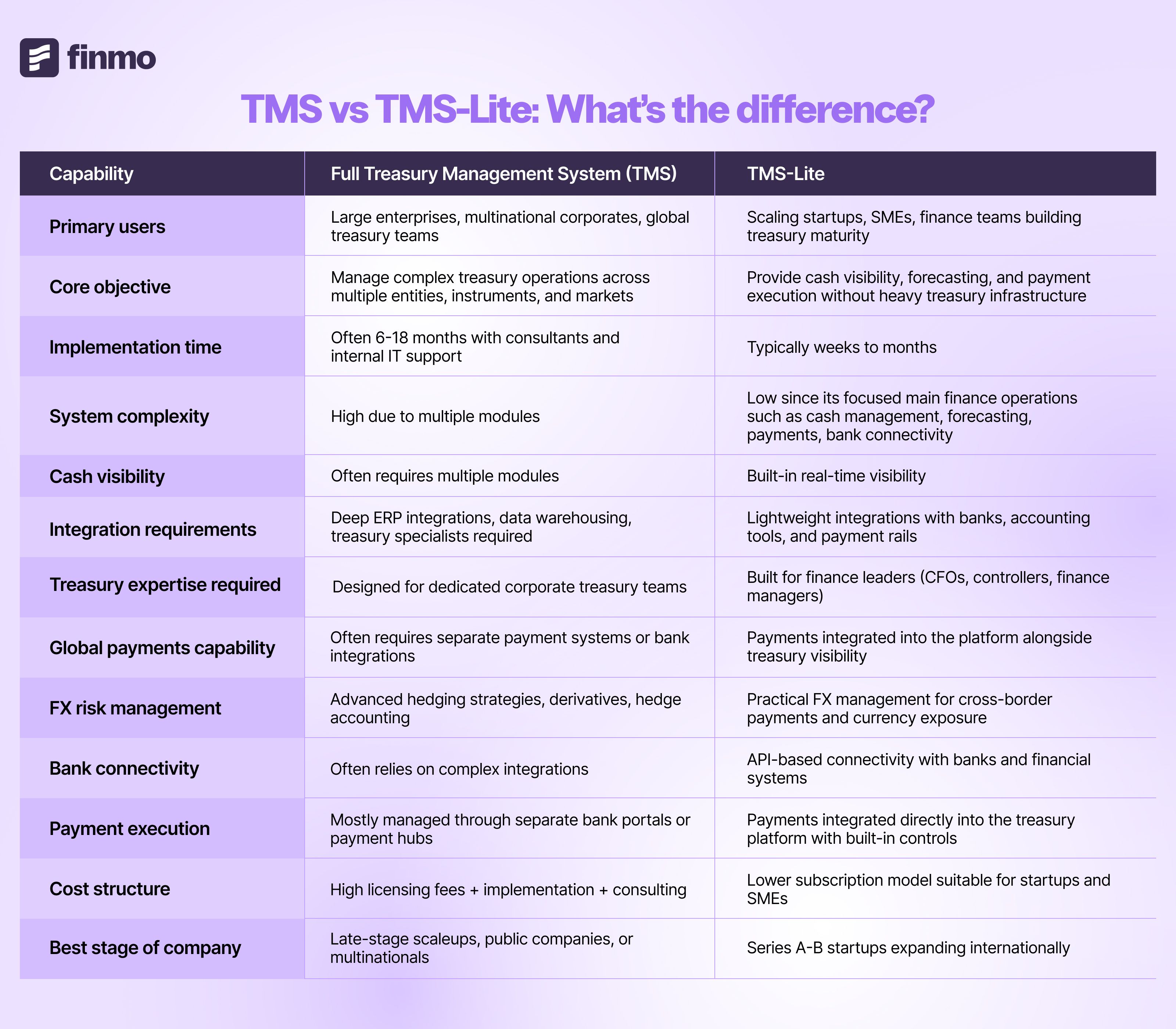
TMS vs TMS-Lite: What’s the difference?
How Finmo works as a TMS-Lite platform
Finmo is a treasury management system built specifically for scaling startups. Rather than forcing finance teams to implement enterprise treasury software, Finmo provides the core capabilities that startups need to manage liquidity, forecasting, and payments–all through a single connected system.
Here’s how Finmo helps startups manage their finance function without the complexity of bloated enterprise TMSes or the ineffectiveness of large spreadsheets:
1. Real-time global cash visibility
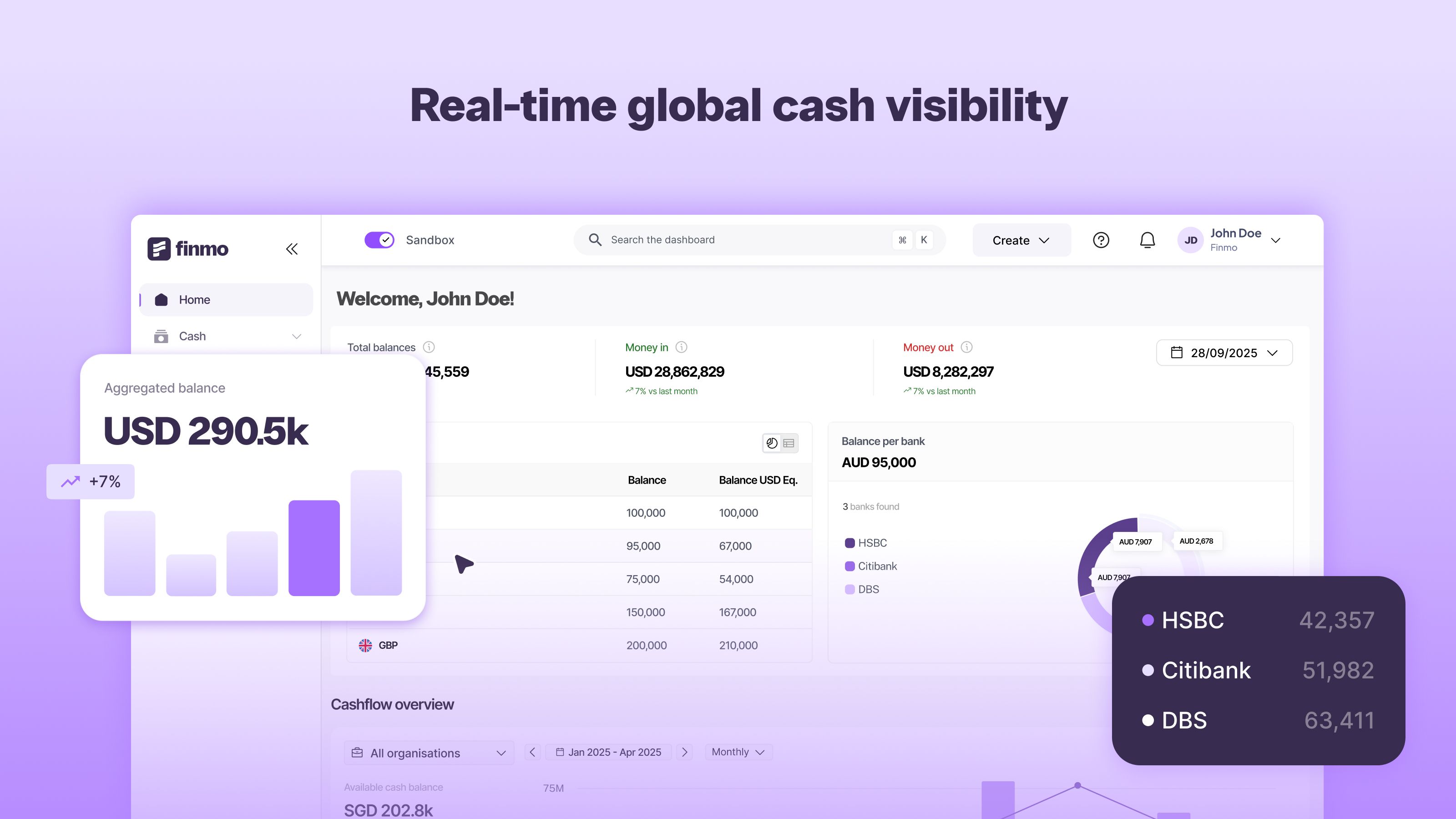
Finmo connects directly to banks, ERPs, and accounting systems via APIs to aggregate balances across currencies and entities into one real-time treasury dashboard.
Instead of compiling bank statements or reconciling spreadsheets, finance teams operate from a continuously updated view of company liquidity.
With Finmo, finance teams can:
- Consolidate balances across banks, entities, and currencies into a single global cash view
- Track liquidity movement across accounts to understand where capital is sitting and how it is being used
- Answer investor and board questions faster with real-time visibility into runway and global liquidity
- Create a single source of truth for cash, allowing CFOs to make faster and more confident decisions.
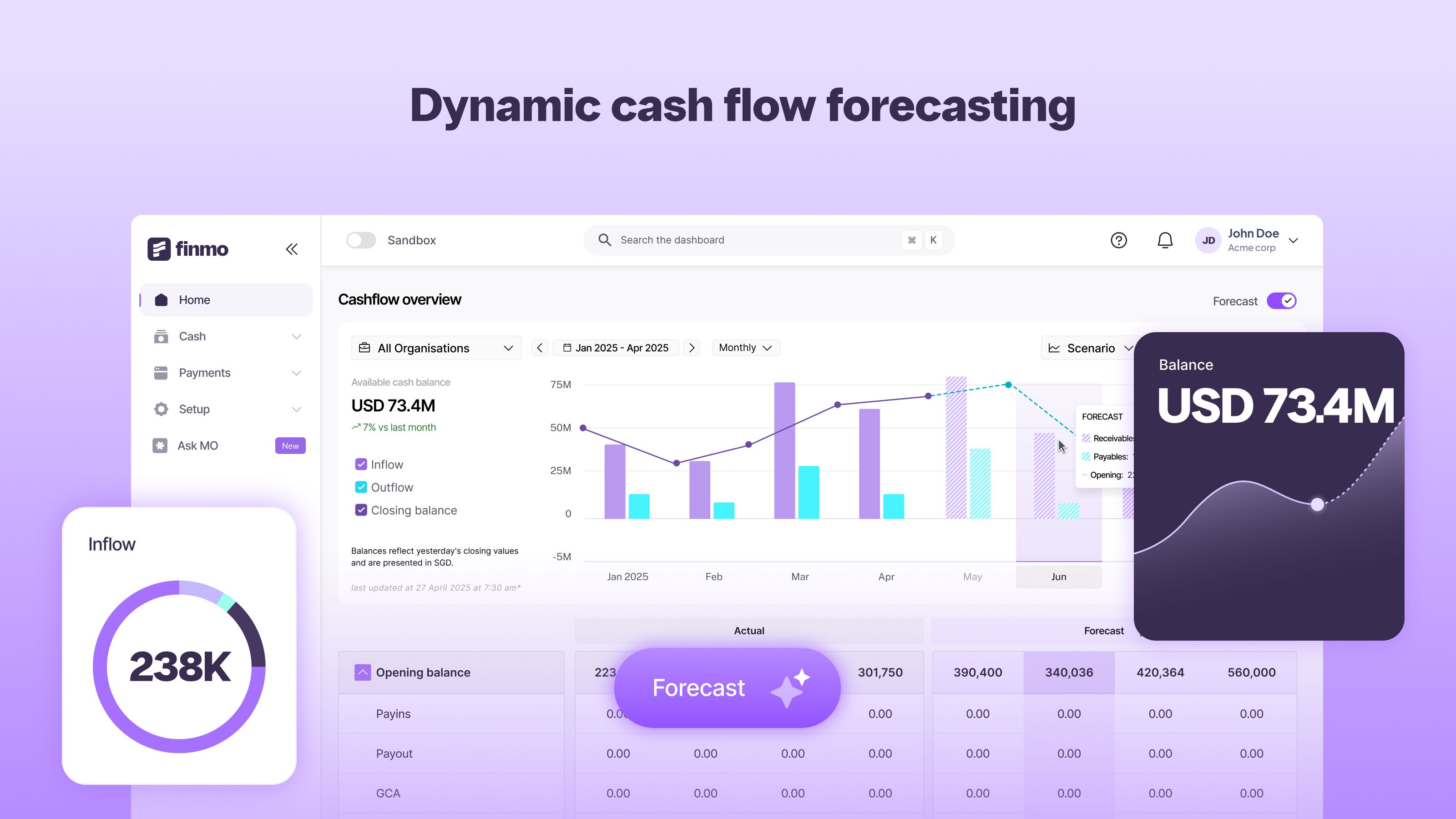
2. Dynamic cash flow forecasting
Finmo’s cashflow forecasting engine combines live financial data to generate liquidity projections. Instead of relying on manually updated spreadsheets, forecasts update dynamically as transactions, invoices, receivables, and payables change.
Finance teams can use forecasting to:
- Project future cash positions using live bank data and financial activityModel best- and worst-case scenarios such as delayed revenue, accelerated hiring, or unexpected expenses
- Adjust forecasting assumptions and visualize results in charts and reports for board discussions
3. Global accounts, payments, and FX management
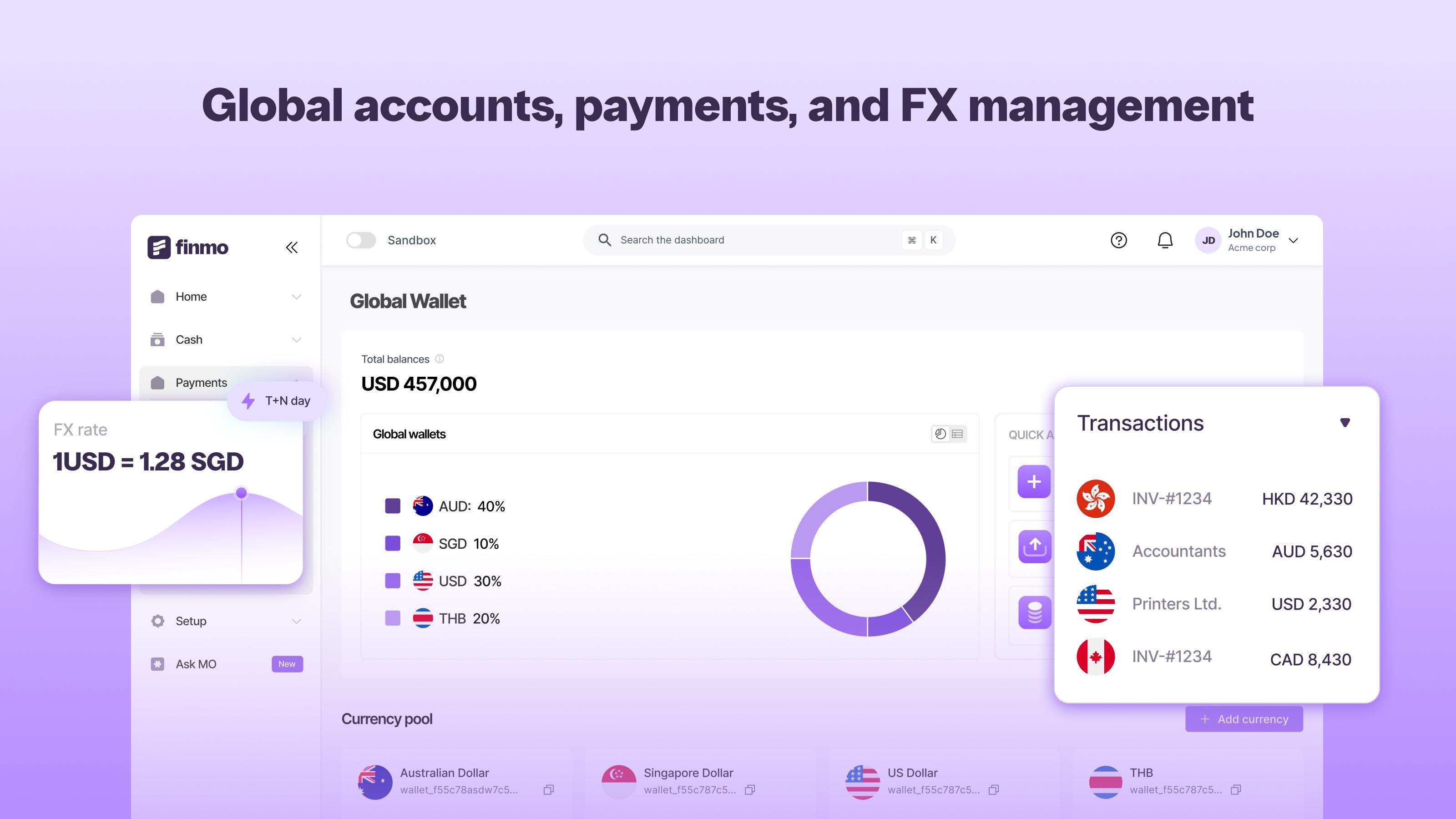
As startups expand internationally, treasury operations must support cross-border payments, multi-currency balances, and foreign exchange exposure.
Finmo enables finance teams to manage global cash movement from a single platform.
With Finmo, startups can:
- Open virtual local currency accounts and hold funds in 36+ currencies without needing to build multiple banking relationships
- Send and receive international payments while tracking the entire workflow
- Manage payables and incoming receivables to maintain clearer short-term liquidity visibility
- Setup FX hedging strategies to reduce unexpected currency costs
- End payment errors and reduce fraud with instant account verification
4. Automated reconciliation and financial controls
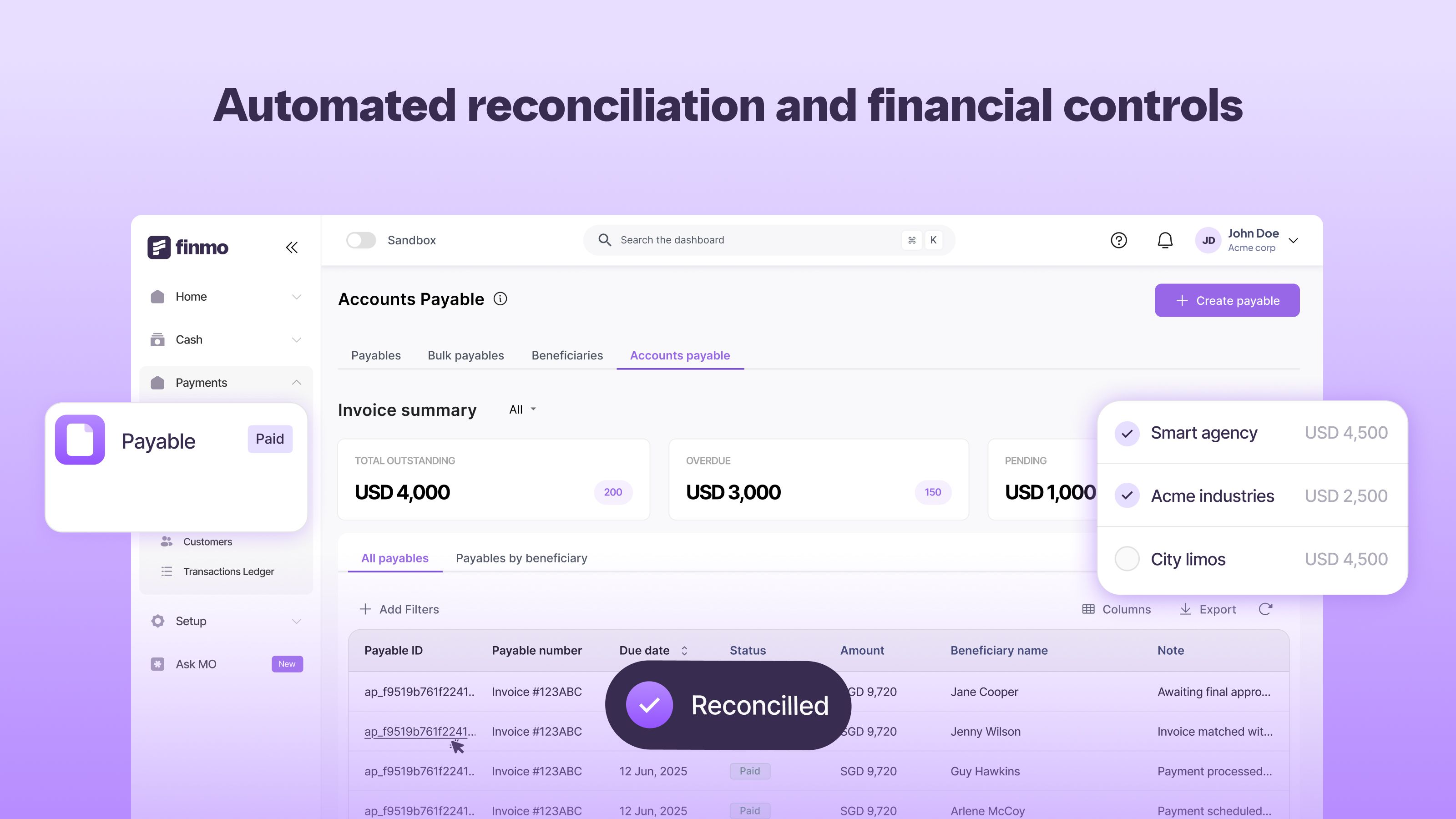
Manual reconciliation becomes increasingly time-consuming as transaction volume grows across banks and currencies. Finmo automates transaction matching and categorization across accounts, reducing spreadsheet work and improving financial accuracy.
Finance teams benefit from:
- Automated reconciliation of transactions across banks and accounts
- Structured approval workflows for payments and treasury actions
- Clear audit trails for financial reporting and compliance
Move to TMS-Lite with Finmo
Most startups try to manage treasury with spreadsheets, bank portals, and manual reconciliation for far longer than they should. That approach might work when the company operates from a single bank account. But once you start managing multiple currencies, global payments, and growing transaction volumes, those tools quickly become a bottleneck.
Finance teams end up spending more time stitching together data than actually analyzing it. Forecasts become unreliable, reconciliation slows reporting, and answering a simple question about liquidity can take hours.
A TMS-Lite platform like Finmo removes that friction. By connecting your banks, payments, and financial data into a single treasury platform, Finmo gives startups real-time cash visibility, more reliable forecasting, and better control over global payments–without the complexity of enterprise treasury systems.
Connect your accounts and start managing treasury with real-time visibility in minutes.
FAQs
- What is TMS-Lite in treasury management?
TMS-Lite is a simplified version of treasury management software designed for startups and scaling companies. It focuses on core treasury workflows such as cash visibility, forecasting, and payment control without the complexity of enterprise treasury systems.
- How is TMS-Lite different from a full treasury management system?
A full Treasury Management System (TMS) supports complex treasury operations such as hedge accounting, investment management, and regulatory reporting. TMS-Lite platforms focus on practical treasury needs like cash visibility, forecasting, and payments, making them more suitable for startups and smaller finance teams.
- What does treasury management mean for startups?
Treasury management for startups refers to how a company monitors, controls, and plans its cash position as it grows. It can include (but isn’t limited to) tracking liquidity across bank accounts, forecasting future cash flows, managing payments, and monitoring FX exposure when operating across currencies.
- Do startups need a treasury management system?
Early-stage startups often manage treasury through spreadsheets and bank portals. However, once companies start operating across multiple bank accounts, currencies, and global payments, manual workflows become unreliable. At this stage, many startups adopt TMS-Lite platforms to gain real-time cash visibility, improve forecasting accuracy, and centralize payment workflows without any complex enterprise treasury systems.
- What is the difference between cash management and treasury management?
Cash management is a part of the company’s treasury function. Cash management focuses on the day-to-day handling of cash, such as tracking balances, sending payments, and managing bank accounts. Treasury management is more strategic, including liquidity planning, forecasting, and financial risk management.
- When should a startup start using a TMS-Lite platform?
Many startups begin using TMS-Lite around Series A or early Series B, when they start managing multiple bank accounts, operating across currencies, and processing higher volumes of cross-border payments.